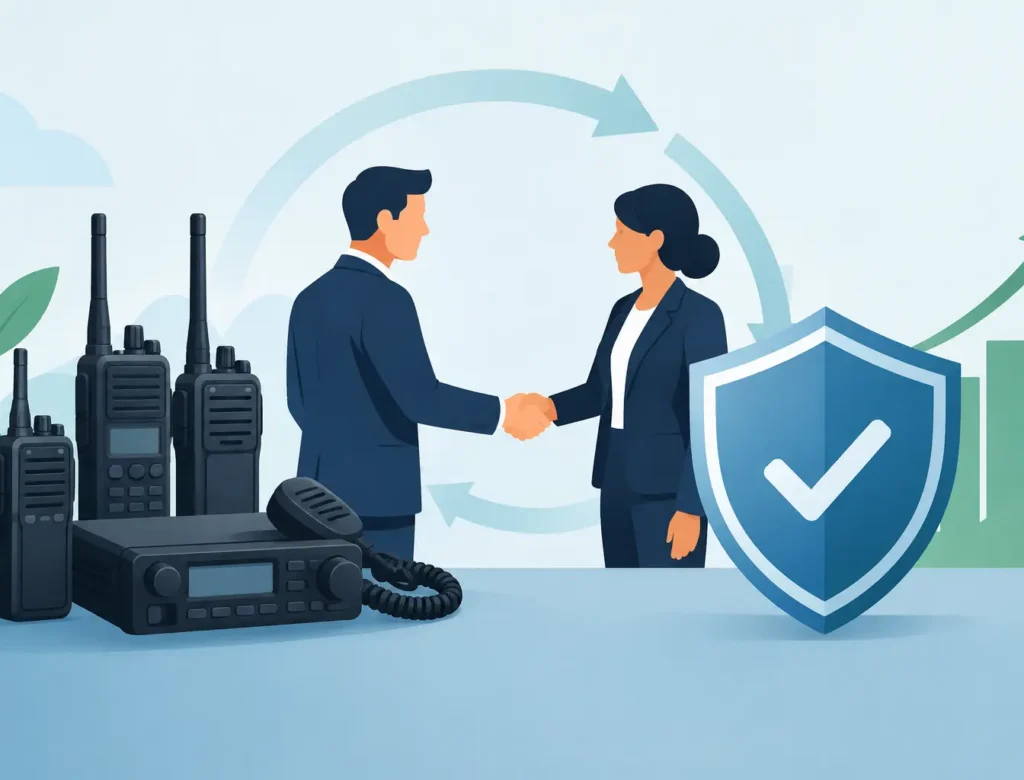
A retired radio fleet is not simply a storage problem. It may contain recoverable capital, customer or operational information, encryption keys, programmed system details, and regulated electronic components that cannot be discarded casually. The right radio resale partners turn that complicated end-of-life event into a controlled process: value is identified, equipment is removed, data is handled responsibly, and every asset reaches an appropriate next destination.
For hospitals, municipalities, utilities, manufacturers, school districts, logistics providers, and public agencies, this work becomes especially urgent during a system upgrade, facility consolidation, or fleet replacement. Equipment that sits in a warehouse while teams decide what to do with it loses value and creates unnecessary compliance exposure. A specialist resale partner gives organizations a faster path from surplus inventory to financial recovery and documented disposition.
What radio resale partners actually do
A qualified radio resale partner does more than purchase used equipment. The partner evaluates an inventory of land mobile radio equipment, determines fair market value, coordinates removal, handles packing or pickup, verifies what can be resold, wipes applicable data, and routes non-resalable material to compliant recycling.
That scope matters because professional two-way radios are not a uniform commodity. A portable VHF radio, a UHF mobile unit, an 800 MHz system component, a base station, charger, microphone, battery, antenna, or accessory may have very different resale prospects. Value depends on manufacturer, model, age, quantity, condition, frequency band, included accessories, and current demand for replacement equipment.
The resale partner should recognize that distinction before equipment leaves your site. General electronics liquidators may accept a mixed lot without understanding its use, programming risks, or market value. A radio specialist can assess the equipment as communications infrastructure rather than as generic e-waste.
Why specialized handling is a business requirement
Organizations commonly focus first on the purchase price of replacement radios. The disposition side of the project receives less attention until old equipment begins occupying secure rooms, maintenance cages, vehicle shops, or warehouse space. That delay can cost money in several ways.
First, used LMR equipment depreciates. Models move out of production, batteries degrade, and demand shifts as agencies and businesses transition systems. A timely quote and pickup preserve more of the remaining market value.
Second, radios can retain sensitive information. Depending on the equipment and system configuration, that may include programmed channels, unit IDs, contact lists, network settings, encryption-related information, or other operational details. The appropriate handling method depends on the radio type and the organization’s security requirements, but the principle is consistent: retirement should include deliberate data management, not an assumption that turning a device off makes it safe.
Third, disposal is not a simple trash decision. Radios, batteries, and related electronics require responsible downstream management. Organizations with environmental, procurement, public-records, or security obligations need confidence that assets are being resold, wiped, or recycled through a documented process.
A specialized partner also reduces the internal labor burden. Instead of asking facilities staff to photograph every unit, source boxes, schedule freight, and negotiate with multiple buyers, an organization can work through one process with a defined point of accountability.
How to evaluate radio resale partners
The best partner is not always the buyer offering the highest number for a small sample of radios. A credible proposal accounts for the full cost and risk of disposition, including logistics, packing, data handling, payment timing, and recycling for equipment that has no resale market.
Confirm radio-market expertise
Ask whether the company regularly buys portable radios, mobile radios, repeaters, base stations, accessories, and mixed LMR inventories across low-band, VHF, UHF, and 800 MHz frequencies. Experience with your radio category affects both valuation accuracy and the ability to identify equipment that still has secondary-market demand.
A knowledgeable buyer should be able to explain what information is needed for a quote. In many cases, clear photos, model numbers, quantities, and a basic condition description are enough to begin. Serial-number detail may be useful for large fleets or higher-value equipment, but it should not become an obstacle that stalls a project.
Evaluate the logistics, not just the quote
A strong offer should make it clear who is responsible for pickup, shipping coordination, packaging, and freight costs. If your organization has hundreds or thousands of radios spread across field offices, schools, vehicles, or regional facilities, nationwide logistics capability is not a convenience. It is central to whether the program will actually be completed.
Free pickup and packing compensation can materially change the net return. An attractive per-unit offer loses value if your staff must spend days packing equipment, ordering materials, preparing bills of lading, and coordinating shipments. Ask for a clear explanation of the pickup process, timeline, and any site preparation that is genuinely required.
Require documented data and downstream controls
A responsible partner should explain how it handles programmed data and what documentation is available after processing. The right level of documentation depends on your internal policy, the type of radio, and whether the equipment supported public safety, healthcare, utility, or other sensitive operations.
Also ask how non-resalable equipment is managed. Some radios and accessories will have limited or no resale value because of age, damage, obsolescence, or missing components. A complete program does not leave those assets behind for your team to solve. It provides a compliant recycling path so every item has a defined disposition route.
Look for speed and certainty
Disposition projects often compete with installation schedules, building moves, fiscal deadlines, and warehouse constraints. Same-day quotations, prompt pickup planning, and rapid payment are operational advantages, not marketing extras. They let your organization close the project while the inventory is still identifiable and accessible.
The terms should also be easy to understand. Know whether the quote is contingent on inspection, how condition differences are addressed, when payment is issued, and what records you will receive. Transparency protects both parties when a mixed inventory includes units in varying condition.
A practical process for retiring a radio fleet
The most efficient projects begin before the replacement radios arrive. Create a working inventory by location and equipment type, then identify equipment that must remain active until cutover. This prevents a disposition vendor from collecting radios that are still needed for daily operations.
Next, separate radios from unrelated electronics where practical. Keep associated accessories together when possible: chargers, speaker microphones, batteries, vehicle mounts, and antennas may affect resale value or simplify identification. There is no need to make every unit look retail-ready, but basic organization speeds evaluation.
Then establish the security and compliance requirements internally. Include communications, IT or cybersecurity, procurement, facilities, finance, and sustainability stakeholders when their approvals are needed. Confirm who can authorize release of assets, whether programming must be removed before pickup, and what documentation the organization expects at completion.
Once a partner has quoted the equipment, agree on pickup logistics and chain-of-custody expectations. For multi-site projects, a phased schedule may be safer than a single collection event. It allows operations to keep critical coverage in place while each location transitions.
After processing, retain the transaction records with the asset-retirement file. These may support accounting, audit, sustainability reporting, procurement compliance, or internal security documentation. The specific records will vary by organization, but the discipline of retaining them should not vary.
When resale is the right option and when it is not
Resale is usually the right choice when equipment is functional, identifiable, and still useful to another organization. It can generate payment or trade-in credit while extending the productive life of equipment that would otherwise sit idle. That is a practical circular-equipment outcome: your organization recovers value, and another user gains access to equipment suited to its needs.
But not every asset should be resold. Units with severe damage, unsupported technology, compromised components, or restrictions that prevent transfer may need to be recycled instead. The goal is not to force value from every device. The goal is to make a defensible, efficient decision for every device.
Radiowell approaches that decision as a full lifecycle process, combining fair-market evaluation, nationwide pickup, data handling, resale, trade-in options, and compliant recycling for equipment that cannot return to service.
The strongest disposition plan starts early, assigns clear ownership, and treats retired radios with the same discipline used to procure and deploy them. When the time comes to replace a fleet, choose a partner that can move equipment out quickly, protect what it contains, and turn surplus communications assets into a documented financial and environmental result.
More News
-
How to Monetize Retired Radios Without Risk
Learn how to monetize retired radios with fair valuation, secure data handling, free pickup, resale options, and compliant…
How to Document End-of-Life Radio Processing
Document end-of-life radio processing with asset records, secure wiping, pickup proof, and recycling certificates that support audits and…
How LMR Recyclers Protect Value and Compliance
LMR recyclers help organizations recover equipment value, protect sensitive radio data, and meet e-waste requirements with documented handling…

America’s largest buyer of used two-way radio equipment. Maximizing value, compliance, and sustainability for surplus LMR equipment.
Recycle and Partners