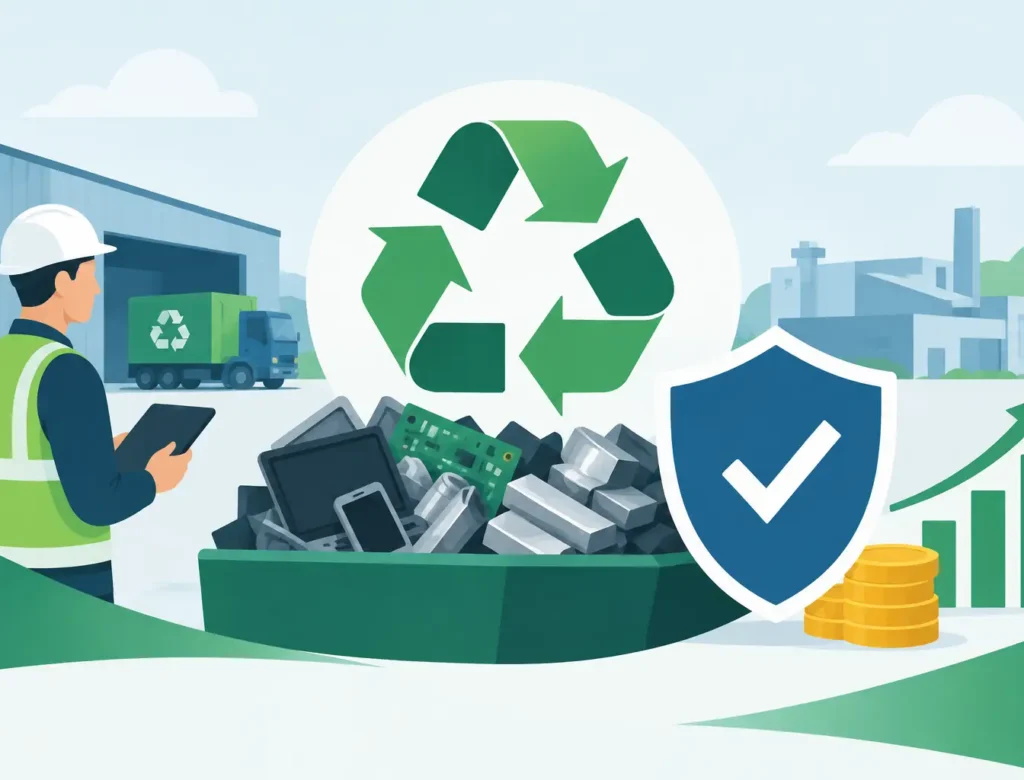
A retired radio fleet can represent far more than a storage problem. Portable radios, mobiles, base stations, chargers, batteries, and accessories may contain recoverable value, sensitive programming, encryption-related information, and regulated electronic components. The right LMR recyclers turn that equipment into a controlled asset-disposition process rather than an untracked handoff.
For hospitals, municipalities, school districts, utilities, manufacturers, and logistics operations, the decision is rarely just whether to recycle. The real question is how to retire communications equipment without creating data exposure, compliance gaps, unnecessary logistics costs, or a missed financial recovery opportunity.
Why LMR Equipment Requires a Specialized Process
Land mobile radio equipment is not handled like ordinary office electronics. A radio system may include portable and mobile units across low-band, VHF, UHF, and 800 MHz frequencies, along with repeaters, control stations, antennas, microphones, batteries, and spare parts. Conditions vary widely. One site may have a few outdated radios in a cabinet, while another has hundreds or thousands of units dispersed across facilities, vehicles, and field locations.
That complexity affects both value and risk. A radio that appears obsolete to its current owner may still have resale demand, usable components, or trade-in value. Conversely, equipment with no resale path must be processed through a compliant downstream recycling channel. Treating every unit as scrap can leave money on the table. Treating every unit as reusable can create security and compliance concerns.
A specialist evaluates the equipment at the item level, identifies viable resale and reuse opportunities, and creates a responsible path for material that cannot be returned to service. This circular approach extends the useful life of working equipment while keeping non-resalable electronics out of improper disposal streams.
What Responsible LMR Recyclers Should Address
A qualified recycler should manage more than the final recycling step. The service should begin with inventory review and valuation, then carry through pickup, data handling, payment, and documentation. Each step protects a different part of the organization’s interests.
Asset Value and Marketability
Professional radio equipment can retain value long after an organization upgrades its system. Demand depends on manufacturer, model, frequency band, condition, included accessories, quantity, and current market availability. A fleet of matching radios with chargers and batteries may command a stronger return than a mixed lot with missing accessories, but mixed or older equipment can still have value.
Organizations should not assume that discontinued equipment has no market. Many users maintain existing radio systems for years, especially in industrial, education, hospitality, transportation, and municipal environments. Components, serviceable units, and compatible accessories may remain useful even when the original owner has moved to a newer platform.
Data Security and Radio Programming
Retired radios can retain more information than many asset managers expect. Depending on the equipment and system configuration, memory may include channel plans, talkgroup information, unit identifiers, contact lists, network settings, passwords, fleet maps, and other operational details. In some environments, programming data may reveal communications architecture or sensitive facility information.
For public safety, government, healthcare, and critical infrastructure organizations, this issue deserves particular attention. Removing a radio from service does not automatically remove its stored information. A sound disposition process includes verified data wiping or reset procedures appropriate to the device, followed by documentation that supports internal security and audit requirements.
Environmental and Regulatory Responsibilities
Radio equipment and related accessories contain materials that should not enter the general waste stream. Batteries, circuit boards, cabling, displays, and other components require proper handling. Organizations also need confidence that transportation, processing, and downstream disposition are managed in accordance with applicable e-waste, EPA, FCC, and DOT requirements.
Compliance is not just a sustainability statement. It is a business control. Documented disposition helps facilities, procurement, IT asset disposition, and sustainability teams demonstrate that retired equipment was handled responsibly. It also reduces the uncertainty that comes from sending electronics to an unknown liquidator or local scrap outlet.
The Difference Between Recycling, Liquidation, and Buyback
These terms are often used interchangeably, but they describe different outcomes. Recycling applies when equipment has reached the end of its useful life and must be broken down through compliant material recovery. Liquidation generally focuses on moving surplus quickly, often without specialized attention to programming, condition, or radio-market demand. Buyback and trade-in programs focus on recovering fair market value from equipment that remains usable.
The strongest disposition strategy may use all three paths within one project. Serviceable radios can be purchased for resale. Higher-value models can support trade-in credit toward replacement equipment. Non-working, damaged, or obsolete units can be recycled responsibly. The appropriate mix depends on the asset condition, age, quantity, and the organization’s financial and operational priorities.
This is why a single quote for a pallet of radios can be misleading if it does not account for what is actually in the pallet. Detailed evaluation produces better decisions than an all-or-nothing scrap price.
A Practical Workflow for Retiring Radio Assets
The best time to plan disposition is before replacement equipment arrives. Waiting until old radios are stacked in closets, vehicle bays, and receiving areas makes inventory less accurate and creates unnecessary handling work. A defined workflow gives teams a cleaner transition.
Start by gathering available information: manufacturer, model numbers, quantities, operating condition, accessories, and locations. Photos can help establish a preliminary assessment when a complete inventory is not immediately available. Do not delay the process because every serial number is not yet confirmed. A specialist can help determine what information is needed for an accurate quote and pickup plan.
Next, establish internal ownership of the project. Communications, facilities, procurement, finance, IT, security, and sustainability may each have a role. One team may be focused on clearing space, while another needs payment records, data-wipe documentation, or environmental reporting. Identifying those requirements at the beginning prevents avoidable follow-up later.
Then choose a provider that can coordinate logistics. Free nationwide pickup and packing compensation can remove a major barrier for distributed organizations, particularly when radios are located across multiple branches, campuses, garages, or field offices. The goal is to avoid turning a surplus disposition project into a shipping project for your staff.
Questions to Ask Before Selecting an LMR Recycler
Before transferring equipment, organizations should confirm how the provider handles valuation, security, transport, and final disposition. A credible process should provide clear answers rather than broad assurances.
Ask whether the provider purchases working equipment, offers trade-in value, and separates reusable inventory from material requiring recycling. Ask how radio data is wiped, what documentation is supplied, and whether the company has experience with the specific manufacturers and frequency bands in your inventory. Also ask who pays for pickup, packing, and freight.
Four practical signs of a dependable partner are:
- Same-day or timely fair-market quotations based on actual equipment details.
- No-cost pickup options that reduce the burden on internal staff.
- Documented data wiping and compliant e-waste processing.
- Clear payment terms and records that support finance, security, and sustainability reporting.
Price matters, but it should not be the only decision factor. The highest informal offer can become expensive if the buyer cannot provide data controls, shipment accountability, or proof of proper recycling. For regulated organizations and public entities, certainty often has real financial value.
Turning Surplus Radios Into Measurable Results
A well-managed LMR retirement program produces outcomes that multiple departments can recognize. Finance gains recovery value from equipment that would otherwise sit idle. Operations clears storage space and reduces the work of coordinating individual shipments. Security gains confidence that sensitive radio programming is addressed. Sustainability teams gain a documented alternative to landfill disposal.
Radiowell approaches this process as reverse logistics and lifecycle management, not simple scrap collection. Equipment that still serves a purpose can be placed back into the market. Equipment that no longer has a usable future can be processed responsibly. The result is a disposition path designed to protect both value and accountability.
Plan Before the Next Upgrade Cycle
Radio replacement projects move quickly once procurement and deployment begin. If the old fleet has no disposition plan, surplus equipment can become an afterthought with real consequences for storage, security, and reporting. Build the recovery and recycling decision into the replacement timeline, assign clear internal responsibilities, and require documentation from the start.
The most useful retired radio is not the one left on a shelf until someone has time to deal with it. It is the one moved through a secure, documented process that returns value where possible and handles every remaining component responsibly.
More News
-
Where to Sell Police Radios for Maximum Value
Where to sell police radios securely: compare buyers, protect programming data, recover fair value, and arrange compliant pickup…
How to Monetize Retired Radios Without Risk
Learn how to monetize retired radios with fair valuation, secure data handling, free pickup, resale options, and compliant…
How Radio Resale Partners Protect Asset Value
Radio resale partners help organizations recover value, protect sensitive radio data, manage pickups, and meet recycling obligations with…

America’s largest buyer of used two-way radio equipment. Maximizing value, compliance, and sustainability for surplus LMR equipment.
Recycle and Partners