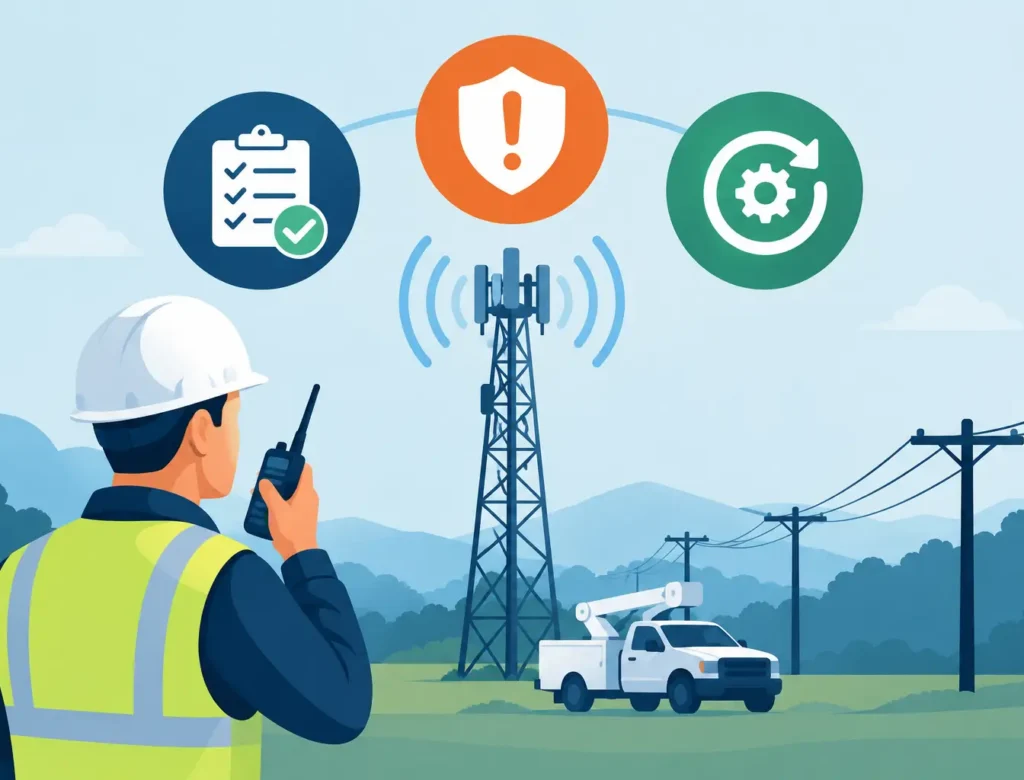
A utility radio upgrade is not finished when the new radios arrive. For electric, gas, water, wastewater, and field-service organizations, the transition also involves fleet continuity, programming control, user adoption, retired-asset security, and budget recovery. Treating the outgoing equipment as an afterthought can create unnecessary risk and leave meaningful value on the table.
The strongest upgrade plans handle both sides of the change at once: deploy equipment that supports current operations, then move retired land mobile radio assets through a documented, secure, and financially accountable disposition process. That approach protects communications reliability in the field while reducing the administrative burden on operations, procurement, IT, and sustainability teams.
Start the Utility Radio Upgrade With Operational Requirements
A radio replacement cycle should begin with what crews need to do, not simply with the age of the current fleet. Field personnel may need better coverage at remote substations, treatment plants, pumping stations, underground facilities, or storm-response locations. Dispatchers may need clearer audio, better interoperability, improved emergency features, or a system that supports a growing number of users.
Coverage is often the deciding factor. A newer portable radio with more features will not solve a coverage problem caused by geography, building construction, antenna placement, or an overloaded system. Before selecting devices, confirm whether the project includes changes to sites, repeaters, base stations, mobiles, consoles, antennas, or backhaul. A portable-radio refresh and a full system migration have very different timelines, costs, and risks.
Technology choices also depend on the organization’s environment. Some utilities are moving from analog to digital platforms to improve audio quality, capacity, and fleet management. Others need compatibility with regional mutual-aid partners, public-safety agencies, or contracted crews. P25, DMR, conventional, trunked, VHF, UHF, 700/800 MHz, and low-band systems each introduce practical trade-offs in coverage, interoperability, licensing, device availability, and long-term support.
The right answer is rarely the radio with the longest feature list. It is the equipment and system design that works reliably for the people restoring service in poor weather, responding to incidents, and maintaining critical infrastructure.
Build a Migration Plan Before Equipment Is Removed
Radio upgrades can disrupt operations when programming, accessories, and user assignments are handled informally. A disciplined migration plan reduces that exposure. Identify which departments, locations, talkgroups, channels, encryption keys, and accessories belong to each phase of the rollout.
Start with a current inventory, even if it is imperfect. Record manufacturer, model, serial number, band, condition, assigned location, and whether the equipment is portable, mobile, base-station, or infrastructure hardware. Include chargers, speaker microphones, batteries, control heads, repeaters, antennas, and spare parts where practical. Accessories may not carry the same value as a working radio, but separating them from the fleet too early can complicate deployment and valuation.
Programming deserves special attention. Retired radios can retain channel plans, unit IDs, talkgroup information, contact lists, GPS settings, Wi-Fi credentials, and encryption-related data. In some environments, that information can reveal operational patterns or create a security concern if equipment changes hands without proper controls. The upgrade plan should establish who authorizes programming changes, when legacy units are disabled, and how sensitive data is removed and documented.
A staged deployment is usually safer than a single cutover. Pilot the new equipment with a representative crew, test coverage where the work actually occurs, and confirm accessory compatibility before broad distribution. Keep enough operational legacy equipment available to support contingencies during the transition, particularly for storm seasons, planned outages, or major maintenance periods.
Protect Value in Retired Radio Equipment
A replacement project creates an asset-recovery opportunity, not just a disposal task. Used two-way radios may retain resale or trade-in value based on model, age, condition, frequency band, market demand, included accessories, and whether the equipment is complete and functional. Professional-grade LMR equipment is often worth more than general electronics buyers recognize.
The most common value loss happens when organizations wait. Radios may sit in storage for months or years, become mixed with unrelated electronics, lose batteries and chargers, or be exposed to moisture and physical damage. Delayed disposition can also mean reduced demand as manufacturers discontinue models, systems migrate, and replacement parts become harder to source.
Do not assume older equipment has no value because it is no longer suitable for your operation. A radio fleet can be obsolete for one organization while remaining useful to another user with a compatible system, limited budget, or need for replacement units. Conversely, heavily damaged or unsupported equipment may have little resale value but still requires responsible recycling.
A specialized radio buyer can evaluate the full range of surplus assets, including portable and mobile radios, base stations, repeaters, and equipment across low-band, VHF, UHF, and 800 MHz frequencies. A fair market quote should account for the actual equipment, quantities, condition, and included components rather than relying on a generic electronics estimate.
Make Data Security and Compliance Part of Disposition
Radio equipment should not be placed into general surplus channels without a clear security and compliance process. The device may contain programming and operational information that should be removed before resale, reuse, or recycling. This is especially relevant for utilities, municipalities, hospitals, and organizations with critical-infrastructure responsibilities.
Documented data wiping provides an accountable handoff. It should be paired with custody controls from pickup through processing, particularly when the fleet includes radios used by field crews, supervisors, security personnel, or emergency-response teams. If encryption-capable equipment is involved, coordinate with the communications manager or system administrator before disposition so that key-management and decommissioning requirements are addressed correctly.
Compliance extends beyond data. Batteries, damaged electronics, and non-resalable equipment should be processed under applicable EPA, FCC, DOT, and e-waste requirements. Sending obsolete radios to a recycler without confirming how they are handled can create uncertainty around environmental responsibility and final disposition.
For many organizations, the practical standard is simple: obtain records that show what was transferred, how sensitive data was handled, and whether the equipment was reused, resold, or recycled. Those records support internal asset controls, sustainability reporting, audit readiness, and responsible governance.
Use a Four-Part Process to Reduce Project Burden
The most efficient utility radio upgrade projects assign clear ownership to the final stage of the lifecycle. First, identify the outgoing equipment and separate it from units still needed for backup or transition. Second, request an itemized valuation from a radio specialist while the equipment is complete and accessible.
Third, coordinate pickup and packing around operational schedules. Nationwide pickup and packing compensation can eliminate a frequent source of delay, especially for organizations with equipment spread across service centers, warehouses, and remote facilities. Finally, confirm payment or trade-in credit, data-wiping documentation, and compliant recycling for equipment that cannot be resold.
Radiowell supports this process with same-day fair-market quotations, free nationwide pickup, rapid payment, documented data wiping, and compliant recycling for used LMR equipment. For asset owners, the goal is not merely to clear storage space. It is to recover value with less logistics cost and less compliance exposure.
Measure the Full Return on the Upgrade
The purchase price of new radios is only one part of the financial picture. A well-managed project also considers reduced maintenance on aging devices, fewer communication failures, improved worker safety, less time spent tracking surplus equipment, and proceeds from retired assets. These outcomes may sit in different departmental budgets, which is why operations, finance, procurement, IT asset disposition, and sustainability teams should coordinate early.
It also helps to establish a repeatable retirement policy instead of waiting for a major system replacement. When a department retires a batch of radios, changes a fleet standard, closes a site, or replaces mobile equipment, the same controls should apply: inventory, secure handling, valuation, pickup, payment, and compliant recycling.
The practical next step is to assign a single owner for the outgoing fleet before approving the new one. That one decision keeps retired radios from becoming an unmanaged storage problem and turns the final phase of the upgrade into a controlled return of value, compliance, and operational confidence.
More News
-
In-House Versus Outsourced Disposition for Radio Fleets
Compare in-house versus outsourced disposition for retired two-way radios to protect data, cut logistics work, recover value, and…
Radio Refurbishment for Reliable Fleet Value
Radio refurbishment can extend equipment value, but only when testing, data removal, documentation, and compliant disposition are handled…
LMR Data Sanitization Guide for Retired Radios
Use this LMR data sanitization guide to protect radio programming, encryption keys, contacts, and fleet records before resale…

America’s largest buyer of used two-way radio equipment. Maximizing value, compliance, and sustainability for surplus LMR equipment.
Recycle and Partners