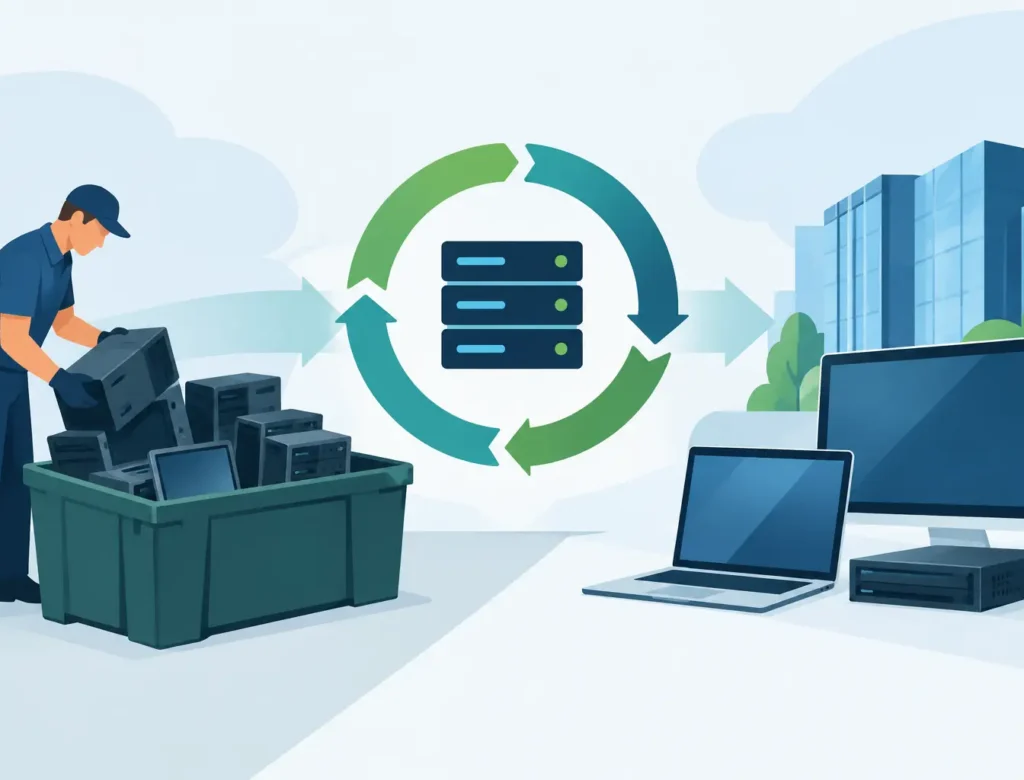
A radio replacement project can look complete when the new portables are issued, mobile units are installed, and dispatch is operating on the new platform. Yet the retired radios, chargers, microphones, control stations, and accessories often remain in storage rooms, fleet garages, and field offices for months. That is where LMR modernization can lose value and create avoidable compliance exposure.
For hospitals, municipalities, school districts, utilities, manufacturers, and logistics operations, modernization is not only a technology purchase. It is a full asset lifecycle event. The organization must protect sensitive programming and encryption data, account for equipment across multiple locations, recover fair-market value where possible, and ensure unusable electronics are handled responsibly.
The strongest modernization plans define the exit path for legacy equipment before the first replacement radio arrives.
Why LMR modernization requires a retirement strategy
Land mobile radio fleets rarely consist of one uniform group of devices. A typical organization may have portable radios assigned to security, maintenance, nursing, transportation, and emergency response teams; mobile radios installed in vehicles; base stations; repeaters; spare batteries; and parts accumulated through years of repairs.
When a system changes frequency bands, migrates from analog to digital, adds P25 capabilities, or moves to a new manufacturer, some of that equipment may no longer serve the organization’s operating requirements. That does not automatically make it worthless. Many used radios retain resale value for organizations operating compatible systems, using them as spares, or supporting less demanding communications needs.
The difference between a productive retirement process and a costly cleanup often comes down to timing. Equipment that is identified, inventoried, secured, and evaluated early can support budget recovery. Equipment left mixed with general surplus can be damaged, misplaced, stripped for parts without documentation, or sent to an inappropriate disposal stream.
A modernization budget should therefore account for both sides of the transition: the cost of acquiring and deploying new equipment, and the value, security, and disposition requirements of the old fleet.
Start with an accurate equipment inventory
The first practical step is determining what the organization actually owns. That sounds straightforward, but distributed LMR fleets make it difficult. Radios may be assigned to departments that maintain their own records. Mobile units may remain in vehicles that have been reassigned. Backup equipment may be stored at remote sites. Accessories can be overlooked because they are not tracked as capital assets.
Build an inventory that captures the manufacturer, model, quantity, condition, frequency band, and location of each primary asset. Include portable radios, mobile radios, base stations, repeaters, dispatch consoles, chargers, batteries, speaker microphones, antennas, and other high-value accessories where practical. Serial numbers are particularly useful for accountability and data-handling documentation.
The inventory does not need to delay modernization until every minor item is counted. It does need to establish a credible picture of the fleet so decision-makers can distinguish equipment that should be retained, redeployed, sold, traded in, or recycled.
Condition matters, but it should not be judged too narrowly. A radio with cosmetic wear may still have meaningful market value. Conversely, a clean-looking unit with a failed display, obsolete battery chemistry, or missing components may have limited resale potential. A specialist evaluation is more reliable than assuming all older equipment belongs in a scrap bin.
Protect programming, encryption, and operational data
Retired two-way radios can contain more information than many asset managers expect. Depending on the system and configuration, a device may retain channel plans, talkgroup assignments, unit IDs, network settings, fleet maps, text messages, scan lists, passwords, encryption keys, and other programming data.
That information can reveal operational details about a hospital, public agency, school district, utility, or enterprise. Even when encryption keys are not present, channel and system data may be sensitive. A radio should not leave organizational control until its data-handling requirements have been assessed.
This is especially relevant for public safety-adjacent operations and organizations with security-sensitive communications. The appropriate process depends on the radio model, programming architecture, encryption implementation, and organizational policy. In some cases, radios can be cleared through approved programming procedures. In others, hardware or media destruction may be necessary.
The key is documented control. Establish who is authorized to release the equipment, what clearing method is required, and what evidence will be retained. A disposition partner should be able to support certified data wiping and provide clear records of the process. General electronics recyclers may understand material recovery, but they may not understand the data and configuration risks specific to professional radio equipment.
Separate redeployment decisions from disposition decisions
Not every legacy radio should leave the organization. Some equipment may remain useful as a backup fleet, a training resource, or a communications tool for teams that are not moving to the new system immediately. Keeping the right equipment can reduce risk during a phased cutover.
However, retaining equipment without a defined operational purpose creates its own problem. Stored radios require space, inventory control, battery management, and periodic review. They can also create confusion if personnel continue using devices that are no longer authorized or compatible with the current communications plan.
A useful approach is to classify retired assets into four paths: retain for an approved purpose, transfer internally, sell or trade in, or recycle. The classification should be made by the people responsible for communications, security, procurement, finance, and sustainability rather than left solely to a facilities cleanout.
This is where trade-offs matter. A large, uniform batch of late-model radios may generate stronger resale or trade-in value than a mixed lot of older units. On the other hand, holding marketable equipment too long can reduce recovery value as demand shifts and newer generations enter the secondary market. The right decision depends on the equipment type, condition, quantity, market demand, and the organization’s deployment timeline.
Build asset recovery into the LMR modernization timeline
Asset recovery works best when it runs alongside deployment planning. Waiting until the final go-live date can create a rush to clear storage areas, especially when old equipment has been gathered from multiple sites without an inventory or security review.
Before rollout, designate a secure staging area for retired assets and establish a chain of custody. Give field locations clear instructions for returning radios and accessories. If equipment is being removed from vehicles, coordinate the schedule with fleet operations so mobile radios, mounts, and antennas are not lost during maintenance or vehicle reassignment.
Then request a fair-market evaluation based on the actual equipment list. A qualified LMR buyer can identify which assets are resalable, which may qualify for trade-in credit, and which require compliant recycling. This creates a more defensible financial picture for procurement and finance teams than assigning a blanket zero value to all retired gear.
For nationwide or multi-site organizations, logistics should be part of the evaluation. Packing, pickup coordination, freight costs, and site labor can quickly consume the proceeds from a disposition project if they are not managed correctly. A specialist that provides nationwide pickup and compensates for packing can reduce administrative burden while keeping more value in the project.
Radiowell helps organizations turn surplus radios and related equipment into payment, trade-in value, or documented recycling, with pickup and data-wiping support designed for professional LMR fleets.
Handle non-resalable equipment with the same discipline
Some equipment will have no practical resale market. It may be damaged, incomplete, too old, restricted by condition, or unsuitable for reuse. That does not make disposal a simple matter.
Professional radio equipment contains electronic components, circuit boards, batteries, and materials that require responsible handling. Batteries deserve particular attention because storage, transport, and recycling requirements vary by chemistry and condition. Equipment should be processed through a channel that follows applicable EPA, FCC, DOT, and e-waste requirements.
Compliance documentation protects the organization as well as the environment. Keep records showing what was collected, what was wiped or destroyed where required, and what was recycled. These records can support internal audit requirements, sustainability reporting, public-sector accountability, and vendor-management obligations.
Free recycling can be valuable, but organizations should confirm what happens after pickup. The objective is not simply to make equipment disappear. It is to ensure assets are handled in a manner consistent with security policy, regulatory responsibility, and the organization’s environmental commitments.
Measure the modernization outcome beyond the new system
A successful LMR project improves communications reliability, coverage, safety, or functionality. It should also produce a clear disposition outcome for the equipment it replaces. Measure recovery proceeds or trade-in credit, the number of assets securely processed, documented data-clearing activity, logistics costs avoided, and material diverted from improper disposal.
Those results help leaders demonstrate that modernization was managed as a business decision, not just a hardware refresh. They also create a repeatable process for future radio upgrades, fleet consolidations, site closures, and technology transitions.
Before approving the next replacement order, assign ownership for the outgoing equipment. That one decision can preserve asset value, protect sensitive communications data, and keep retired radios moving into their next responsible use instead of becoming an expensive problem in storage.
More News
-
How to Monetize Retired Radios Without Risk
Learn how to monetize retired radios with fair valuation, secure data handling, free pickup, resale options, and compliant…
How Radio Resale Partners Protect Asset Value
Radio resale partners help organizations recover value, protect sensitive radio data, manage pickups, and meet recycling obligations with…
How to Document End-of-Life Radio Processing
Document end-of-life radio processing with asset records, secure wiping, pickup proof, and recycling certificates that support audits and…

America’s largest buyer of used two-way radio equipment. Maximizing value, compliance, and sustainability for surplus LMR equipment.
Recycle and Partners