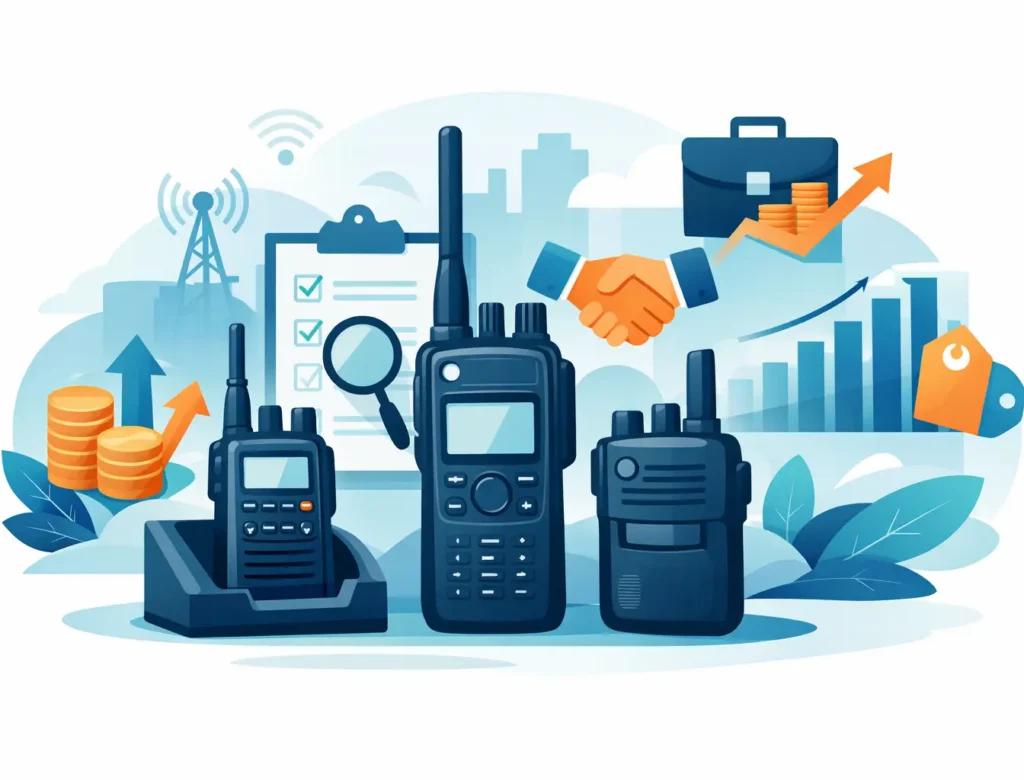
A radio fleet replacement can leave a facilities office, radio shop, or warehouse holding hundreds of Motorola units that still have value – along with chargers, microphones, batteries, mobile mounts, and infrastructure components. The decision to sell Motorola radios should not become an unplanned liquidation project. Done correctly, it recovers budget, protects potentially sensitive configuration data, and creates a documented path for equipment your organization no longer needs.
For public agencies, hospitals, school districts, utilities, manufacturers, and logistics operations, retired land mobile radio equipment is more than surplus electronics. It may contain fleet identifiers, talkgroup information, encryption-related material, contacts, and programming details. The right disposition process accounts for financial recovery and compliance at the same time.
Start With the Equipment You Have
You do not need a perfectly organized inventory to request a valuation, but basic equipment information produces a faster and more accurate quote. Start with the model number on the radio label rather than relying on a general description such as “Motorola walkie-talkies.” A model number, quantity, condition, and a few clear photos usually establish the foundation for an initial review.
Include portable radios, mobile radios installed in vehicles, repeaters, base stations, control stations, chargers, speaker microphones, antennas, batteries, and accessory inventory. Older equipment can be worth evaluating even when it no longer fits your current system. A buyer specializing in LMR equipment can assess demand by model, band, accessories, condition, and resale potential rather than treating every unit as generic e-waste.
Frequency range also matters. Motorola equipment used on low-band, VHF, UHF, and 800 MHz systems may serve different secondary-market needs. A radio’s age matters, but it is not the only factor. A well-maintained older unit with useful accessories and a known service history can be more valuable than a newer unit that is damaged, incomplete, or locked into a configuration that cannot be responsibly released.
What Determines Motorola Radio Resale Value?
Fair-market value is not simply a published list price multiplied by unit count. Professional radio equipment is evaluated as working communications hardware with a specific model, feature set, condition profile, and market demand. Complete, functional fleets tend to be easier to process and may command stronger offers than scattered individual units, but mixed lots can still be worthwhile.
Condition affects value in practical ways. Cracked housings, missing knobs, worn keypads, corroded battery contacts, broken displays, and water damage can reduce resale potential. That does not mean damaged equipment has no appropriate disposition path. It means the lot may contain both resalable items and units best directed to compliant recycling.
Accessories can change the economics of a project. Multi-unit chargers, OEM batteries, vehicle cradles, remote speaker microphones, and properly matched power cables can make a fleet more useful to a subsequent owner. On the other hand, depleted batteries and obsolete accessories may have limited resale value. An experienced buyer should separate these outcomes clearly instead of making unrealistic assumptions about every item in a retired fleet.
The most valuable factor is often completeness of information. If your team can identify whether radios are operational, whether batteries are included, and whether there are encryption or programming concerns, the buyer can set appropriate expectations early. That reduces delays after pickup and helps protect the value in the transaction.
Sell Motorola Radios Without Creating a Security Gap
A radio may look like a simple handheld device, but its stored information can be operationally sensitive. Depending on the system and model, retired units may retain channel plans, radio IDs, agency or department names, contact lists, network settings, and encryption-related programming. A casual resale process can leave an organization unable to confirm how that information was handled.
Before transferring equipment, establish who is responsible for deprogramming, data wiping, and documentation. This responsibility should be clear for every class of equipment, including portables, mobiles, dispatch consoles, and infrastructure. If your organization manages encryption, involve the radio system administrator or communications manager before the equipment is released. They can determine whether keys must be zeroized, whether units require removal from a management platform, and whether any assets should be retained for records or investigation requirements.
Do not assume a factory reset addresses every concern. The appropriate method depends on the radio model, its programming environment, and the information stored on the device. A specialized disposition partner should provide a documented process for secure data handling and certified wiping where applicable. That documentation supports IT asset disposition, procurement, legal, and audit requirements long after the radios leave your site.
Plan the Pickup Around Your Operation
The logistics of moving a radio fleet often determine whether an otherwise valuable project becomes a burden. A municipal department may have inventory split among vehicles, field offices, and a central warehouse. A hospital may need a pickup window that does not interfere with clinical operations. A utility may have radio assets staged across service districts after a system migration.
The best approach is to set a clear handoff point and identify what will be included before pickup. If radios are still installed in vehicles, decide whether your internal team will remove them or whether the project scope requires coordinated removal. If equipment is stored at several locations, consolidate it when practical, but do not create extra work merely to make the lot look neater. A capable buyer can help structure the shipment around the condition and distribution of the assets.
Free nationwide pickup and packing compensation can materially change the result. Freight, boxes, packing labor, and staff time can consume the proceeds from a small or mid-sized lot when they are not planned for. The goal is not only to receive an offer. It is to understand the net recovery after logistics and the responsibilities assigned to each party.
For large fleets, maintain a simple chain-of-custody record. Record the pickup date, location, approximate quantities, equipment categories, and the receiving party. This protects both operational accountability and financial reconciliation. It also gives sustainability and asset-management teams the evidence they need for internal reporting.
Use a Disposition Partner That Can Handle Every Outcome
A radio fleet rarely consists entirely of ready-to-resell equipment. Some units may be current and functional. Others may be incomplete, damaged, obsolete, or beyond economical repair. Choosing separate vendors for saleable assets, data handling, freight, and recycling adds administrative work and increases the chances that equipment falls outside the documented process.
A specialist such as Radiowell can evaluate the full lot and provide one managed route for buyback, trade-in credit, resale, data handling, and compliant recycling. That approach matters when an organization wants to retire equipment responsibly without requiring staff to test, list, pack, ship, and reconcile each item individually.
Ask direct questions before selecting a partner. Can they quote the equipment promptly? Will they arrange pickup nationwide? How do they address programming and sensitive data? What paperwork is provided? How are non-resalable radios and batteries processed? When is payment issued? Clear answers are more useful than a high initial offer that later changes because logistics, condition, or compliance responsibilities were never defined.
Accreditation, industry specialization, and a documented recycling process are meaningful indicators. General electronics buyers may be able to move consumer devices, but professional two-way radio assets require familiarity with model identification, accessories, radio-system security, battery handling, and federal and state e-waste obligations.
When Trade-In Value May Be Better Than Cash
Cash recovery is useful when a project is closing out a legacy system or consolidating facilities. Trade-in credit may be the better choice when your organization is moving to new radios, expanding coverage, or standardizing equipment across departments. The right answer depends on the procurement timeline, budget structure, and whether replacement communications equipment is already planned.
For example, a school district replacing aging portables may use trade-in value to reduce the cost of a new fleet. A manufacturer that has already completed a system upgrade may prefer direct payment for the surplus assets. In both cases, the retired radios should be evaluated before they accumulate in storage, lose accessories, or become mixed with equipment that belongs to active operations.
Make Surplus Radios a Managed Asset Decision
The strongest disposition projects begin before storage space becomes a problem. As replacement radios are deployed, designate outgoing equipment, preserve chargers and matched accessories, involve the communications administrator early, and document the transfer. That discipline turns a difficult cleanup task into a controlled recovery process.
Retired Motorola radios can fund future communications needs, reduce disposal risk, and keep reusable equipment in circulation. Treat the final handoff with the same care your organization applies to the system that kept people connected in the first place.
More News
-
Who Buys Radio Repeaters and What They Look For
Who buys radio repeaters? See which organizations purchase surplus equipment and how compliant resale preserves value, data security,…
Prepare Radios for Equipment Retirement Right
Learn how to prepare radios for equipment retirement with secure data handling, accurate inventory, safe packing, value recovery,…
Radio Asset Recovery That Pays and Protects
Radio asset recovery turns retired two-way radios into value while protecting data, meeting compliance duties, and reducing disposal…

America’s largest buyer of used two-way radio equipment. Maximizing value, compliance, and sustainability for surplus LMR equipment.
Recycle and Partners