
A hospital radio fleet replacement is not complete when the new radios arrive. It is complete when every retired portable, mobile, charger, battery, base station, and accessory has been accounted for, cleared of sensitive information, and moved out of the facility through a documented process. For healthcare organizations, that final phase protects continuity, compliance, staff time, and the remaining value of equipment that may still have a useful second life.
Hospitals depend on land mobile radio systems because critical communications cannot wait for a congested cellular network, a drained personal phone, or a Wi-Fi dead zone. Security teams, engineering, environmental services, transport, emergency management, and clinical support personnel often rely on radios across large campuses and satellite facilities. Replacing that fleet is an operational project, not a simple purchasing event.
Start Hospital Radio Fleet Replacement Before Cutover
The strongest replacement plans begin while the existing fleet is still deployed. Waiting until the last old radio is collected creates uncertainty around ownership, quantities, programming, storage, and resale value. It can also leave departments holding retired equipment in offices, closets, vehicles, and maintenance areas for months.
Build a retirement inventory alongside the deployment inventory. Record the manufacturer, model, serial number, quantity, condition, assigned department, and included accessories. Separate portable radios from mobile radios installed in security vehicles, maintenance carts, shuttle buses, or command units. Include infrastructure equipment such as control stations, repeaters, microphones, power supplies, and antenna-related hardware where applicable.
This does not need to become a burdensome manual exercise. A practical inventory can start with existing asset records, radio programming files, purchase history, and departmental sign-off sheets. The goal is to establish a defensible baseline, then reconcile the equipment that is returned as the new fleet is issued.
Timing matters. If the hospital plans to keep a portion of the old fleet for emergency contingency, designate those radios clearly and store them separately from equipment slated for disposition. A small, maintained reserve can be sensible during a phased rollout. An undefined pile of old radios is not a contingency plan. It is an untracked asset and data-security risk.
Protect Sensitive Data on Retired Radios
A two-way radio may hold more information than its exterior suggests. Depending on the system and configuration, a retired unit can retain radio IDs, talkgroup assignments, channel names, scan lists, contact lists, text messages, network settings, Wi-Fi credentials, Bluetooth pairings, GPS data, and encryption-related configuration. Hospitals should not assume that turning off a radio, removing its battery, or performing a basic reset removes all recoverable information.
The disposition process should define who has authority to approve data clearing, which units require programming review, and what documentation the hospital needs afterward. That is especially relevant when radios support security operations, incident response, patient transport coordination, or other sensitive workflows.
Encryption requires additional care. The correct procedure depends on the radio platform, key-management method, and the hospital’s security policy. The point is not to apply a one-size-fits-all erase command. It is to ensure that authorized personnel address keys and configuration data before equipment leaves organizational control, then retain records showing the work was completed.
A qualified reverse-logistics partner can provide certified data wiping as part of the disposition workflow. That helps communications, IT, security, and asset-management teams close the loop without creating an additional project for already busy hospital staff.
Separate Equipment by Its Best Next Use
Not every retired radio has the same destination. Some professional LMR equipment remains marketable even when it is no longer suitable for a hospital’s current system. Other units are damaged, obsolete, unsupported, incomplete, or uneconomical to refurbish. Treating all of it as scrap leaves money on the table. Treating all of it as resale inventory can create delays and compliance exposure.
The practical answer is to evaluate the fleet as a whole. Portable and mobile radios with active demand, usable batteries, chargers, microphones, and compatible accessories may carry fair-market value. Equipment across low-band, VHF, UHF, and 800 MHz can be evaluated based on model, condition, quantity, feature set, and secondary-market demand.
Older accessories may matter more than expected. A large group of OEM chargers, speaker microphones, remote mics, control heads, or mounting hardware can improve recovery value when matched to supported radio models. Conversely, swollen batteries, damaged power supplies, and non-resalable electronics need compliant handling rather than an informal donation or dumpster decision.
This is where a trade-in or buyback assessment can change the economics of replacement. Value recovered from retired equipment can offset part of the new radio investment, while non-resalable assets can be routed to compliant recycling. The hospital receives one coordinated path rather than separate resale, shipping, storage, and e-waste problems.
Avoid Logistics That Disrupt Patient Care
Hospitals have little room for loading-dock confusion, unsecured staging, or repeated requests for staff assistance. The disposition plan should reflect that reality. Establish a pickup window, identify the staging location, clarify who can release equipment, and decide whether packed shipments or on-site consolidation makes the most sense.
For a single outpatient site with a limited number of radios, packing and shipment may be straightforward. For a health system with multiple campuses, security vehicles, off-site clinics, and years of accumulated surplus, a coordinated nationwide pickup process can remove a major administrative burden. Free pickup and packing compensation can be particularly meaningful when facilities teams would otherwise spend hours sourcing boxes, arranging freight, and moving equipment through restricted hospital spaces.
Chain of custody should be clear from the moment equipment is collected. That includes serial-number reconciliation when needed, documented transfer, data-wiping records, and recycling documentation for assets that cannot be reused. Procurement may focus on cost recovery, while security and compliance teams need evidence of controlled disposition. A properly designed process serves both needs.
Account for Batteries and E-Waste Separately
Radio batteries are not an afterthought. They can be damaged in storage, subject to transportation requirements, and unsuitable for ordinary waste streams. Charging banks, battery packs, obsolete base equipment, and power accessories also require appropriate e-waste handling.
Hospitals should avoid storing retired batteries indefinitely in maintenance rooms or sending mixed electronics into general waste. Beyond environmental responsibility, improper handling can create safety and liability concerns. Compliant recycling should align with applicable EPA, FCC, DOT, and e-waste requirements, with documentation that supports the hospital’s sustainability and asset-disposition records.
Reuse remains preferable when equipment is viable and can be responsibly resold. Recycling is the right outcome when it is not. A circular approach recognizes both realities and prevents valuable electronics from being discarded prematurely.
Give Finance, Facilities, and Security a Shared Process
Radio replacement often crosses departments that do not normally manage the same project. Communications teams understand coverage, channels, and radio programming. Security knows the operational sensitivity of the fleet. Facilities may control storage and pickup access. Finance needs payment records and asset retirement support. Sustainability leaders need responsible end-of-life reporting.
Assigning a single internal owner for the disposition workstream keeps those interests aligned. That person does not need to perform every task. They need to set the schedule, maintain the inventory, approve exceptions, and ensure that no equipment leaves without the agreed controls.
Ask prospective disposition partners direct questions: Can they quote the full fleet quickly? Will they accept mixed models and conditions? Do they provide nationwide pickup? How is data wiping documented? What happens to equipment without resale value? When is payment issued? Clear answers prevent a replacement project from becoming a storage problem.
Radiowell helps hospitals turn surplus radio equipment into financial recovery, documented data protection, and compliant recycling, without adding logistics cost to the organization. The best time to plan that outcome is before the first replacement radio is assigned – while the old fleet is still visible, organized, and worth managing well.
More News
-
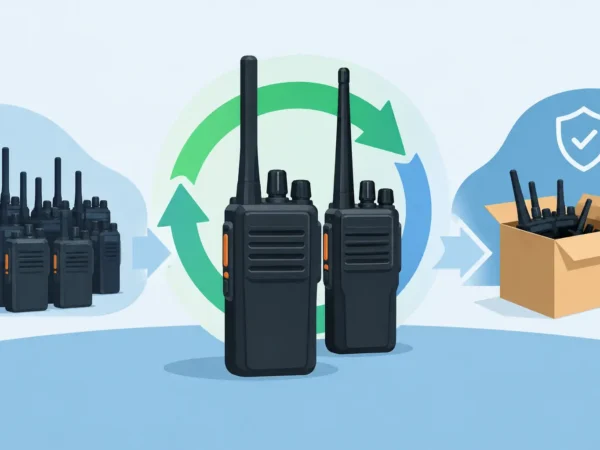
Mobile Radio Resale Guide for Surplus LMR
Use this mobile radio resale guide to value surplus LMR equipment, protect data, arrange pickup, meet compliance obligations,…
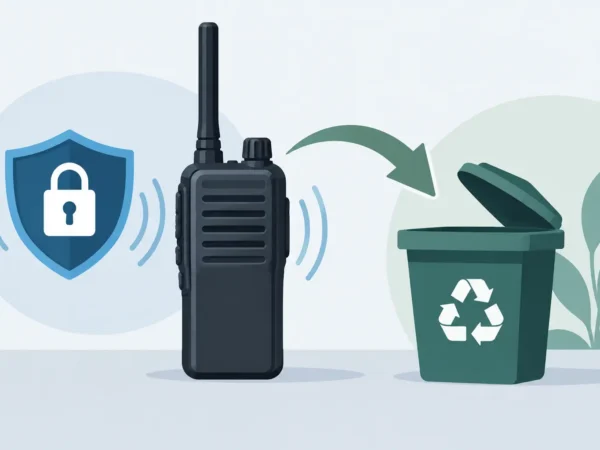
Do Radios Store Encryption? A Disposal Reality
Do radios store encryption? Learn where keys and programming data may remain in retired two-way radios and how…
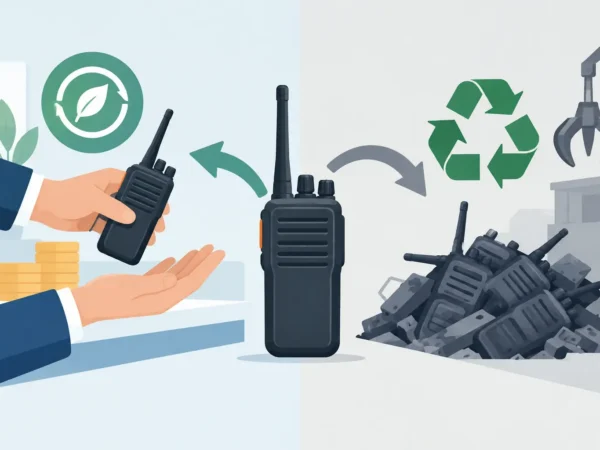
Radio Buyback Versus Scrapping Explained
Radio buyback versus scrapping affects recovery, compliance, data security, and sustainability. See how to choose the right route…

America’s largest buyer of used two-way radio equipment. Maximizing value, compliance, and sustainability for surplus LMR equipment.
Recycle and Partners