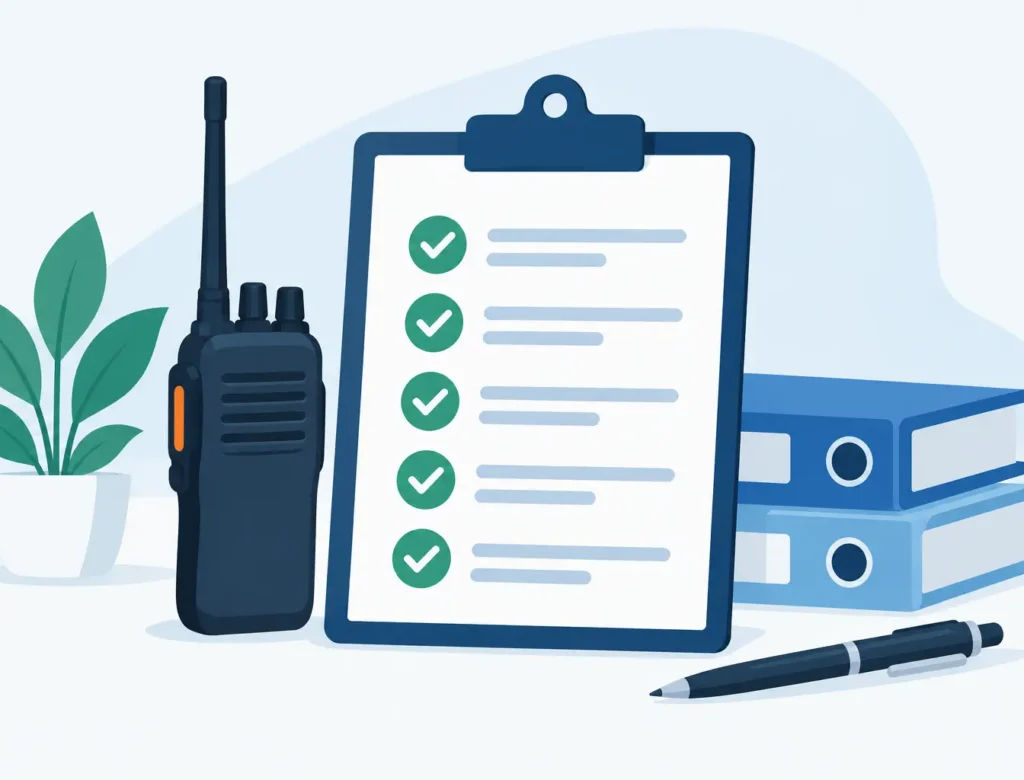
A retired radio fleet can still hold encryption keys, system programming, agency identifiers, and meaningful resale value. A complete radio disposition documentation checklist gives operations, procurement, IT, and sustainability teams one defensible record of what left the organization, who handled it, how sensitive data was addressed, and what happened to every asset.
For hospitals, municipalities, utilities, school districts, manufacturers, and logistics operations, radio retirement is not a back-room cleanup task. It is an asset recovery, security, and compliance event. The right documentation helps prevent a missing portable radio from becoming an audit issue months later, while making it easier to capture fair-market value from equipment that still has a useful life.
Why radio disposition requires its own documentation
Land mobile radio equipment does not follow the same retirement path as ordinary office electronics. A fleet may include portable radios assigned to individual users, vehicle-mounted mobile radios, chargers, microphones, repeaters, base stations, batteries, antennas, and programming accessories. Some units may be obsolete to your system but valuable to another organization. Others may be damaged, unsupported, or unsuitable for resale and require compliant recycling.
The documentation must account for those different outcomes. It should also reflect the radio-specific risks. A unit may retain programmed channels, talkgroup information, unit IDs, Wi-Fi or Bluetooth pairings, GPS settings, contacts, text messages, encryption material, or other configuration data. The precise risk depends on the radio model, system design, and how the organization uses it.
A clear record protects the organization in three practical ways: it establishes chain of custody, supports data-security controls, and proves responsible downstream handling. It also gives finance and procurement a reliable basis for reconciling recovered value, trade-in credit, or recycling records.
Radio disposition documentation checklist
Start the checklist before equipment is removed from service. Documentation built after radios have been mixed in a warehouse or loaded for shipment is harder to verify and often misses serial numbers, accessories, or condition details.
1. Establish the project owner and approval record
Identify who owns the disposition project and who is authorized to release the assets. For a public agency, that may include communications, procurement, property control, and finance. For a hospital or enterprise, it may involve facilities, security, IT, and an asset disposition lead.
Record the project name, facility or department, reason for disposition, approval date, and internal cost center or asset category. Common reasons include system replacement, migration to a new frequency band, consolidation after a merger, end of a lease, damaged inventory cleanup, or warehouse surplus reduction.
This first record prevents a common problem: equipment being treated as surplus before the accountable department has formally released it.
2. Create a radio-by-radio inventory
The inventory is the backbone of the disposition file. At a minimum, capture manufacturer, model number, serial number, quantity, and equipment type. Separate portable radios, mobiles, base stations, repeaters, control stations, chargers, batteries, speaker microphones, remote microphones, antennas, and other accessories.
Add the frequency band where available, such as VHF, UHF, 700/800 MHz, or low-band. Include asset tags and internal property numbers if your organization uses them. For radio fleets assigned to users or vehicles, capture the last known department, vehicle number, site, or custodian when practical.
Condition notes improve valuation accuracy. A simple designation such as working, untested, damaged, missing battery, missing accessory, or parts-only is often sufficient. Do not guess. If equipment was not tested, document it as untested rather than representing it as functional.
Photographs can help for larger lots, specialized infrastructure, visibly damaged units, or equipment with uncertain model numbers. They are not always necessary for every handheld, but they can resolve disputes and speed up a quotation.
3. Document the security review before release
Retired radios can retain more than channel names. The security review should identify whether the fleet uses encryption, over-the-air programming, wireless management, GPS, text messaging, user authentication, or any application that stores operational information.
Document the approved disposition method for programming and data. Depending on the equipment and organizational policy, this may include removal of encryption keys, a factory reset, clearing user data, deletion of stored contacts and messages, deprovisioning from management systems, or certified data wiping by a qualified downstream provider.
Do not treat a basic power-on reset as proof that sensitive information is gone. Some settings or keys may require model-specific procedures and authorized software. If the radio system supports encryption, involve the system administrator or communications manager before equipment changes custody.
Your record should state the method used, the date completed, the responsible person or service provider, and any exceptions. If radios are being transferred to a specialist for controlled wiping, document that responsibility in the chain-of-custody record rather than leaving it implied.
4. Record chain of custody and pickup details
Once assets leave a facility, the organization should be able to show exactly when possession changed. Record the pickup date, origin location, carrier or pickup provider, shipment or reference number, number of cartons or pallets, and the name of the person releasing the equipment.
For larger projects, include a packing list that ties carton or pallet numbers to the inventory. This is especially useful when equipment comes from several sites or when radios, accessories, and batteries ship separately. Lithium-ion battery handling may affect packing and transport requirements, so identify battery types and quantities before pickup.
Obtain a receipt or acknowledgment of transfer. The goal is not paperwork for its own sake. It is to eliminate uncertainty if an item is later reported missing, if a serial-number question arises, or if finance needs to reconcile the final settlement.
5. Preserve valuation and settlement records
A disposition file should include the original quote, final evaluated value, any deductions or condition changes, and the payment or credit record. If the organization receives trade-in credit toward replacement radios, document the credit amount and the related purchase or project reference.
Fair-market value can change based on model demand, included accessories, functionality, cosmetic condition, and whether key components are present. The quoted value may therefore depend on an accurate inventory and honest condition description. A strong provider should explain material differences between an initial estimate and a final evaluation.
Retain the purchase order, invoice, payment confirmation, or credit memo with the inventory. This gives procurement and finance a complete audit trail and confirms that surplus equipment produced a documented financial outcome rather than disappearing as untracked scrap.
6. Obtain downstream reuse or recycling documentation
Not all radios will be resold. Some equipment is too old, damaged, incomplete, or restricted for reuse. For those assets, retain documentation showing that they were handled through an appropriate recycling process.
The record should identify the equipment or material category, quantity or weight where applicable, date processed, and the party responsible for recycling. If your organization has environmental reporting obligations, this information supports sustainability metrics and helps demonstrate that obsolete electronics were managed responsibly.
For public-sector and regulated organizations, ask how the provider handles components that cannot be resold, including batteries and electronic assemblies. The answer should be specific enough to support your internal compliance requirements, not simply a verbal assurance that materials will be disposed of properly.
Keep the checklist proportional to the project
A 20-radio department refresh does not need the same administrative effort as a statewide radio-system migration. The principle is proportional control: document enough detail to establish accountability, data handling, value, and final disposition without creating a process so burdensome that teams bypass it.
For a small lot, a serial-number inventory, security signoff, pickup receipt, final settlement, and recycling confirmation may be enough. For a multi-site fleet, add site-level packing records, custodian approvals, encrypted-radio handling procedures, and reconciliation reports by department or location.
It also depends on the equipment. An older analog portable without sensitive programming may have limited data risk, while a modern digital radio used by public safety, healthcare security, or utility crews deserves a more deliberate review. Treat the risk profile of the radio system, not just the resale value of the hardware, as the deciding factor.
Make disposition records useful after the pickup
Store the completed file where procurement, finance, communications, and compliance teams can retrieve it. Use a consistent naming convention that includes the project, date, and facility or department. Keep it with related replacement-system records when the disposition is part of a larger technology refresh.
A specialized radio disposition partner can reduce the administrative burden by providing inventory support, nationwide pickup records, valuation documentation, certified data-wiping records, and recycling documentation. Radiowell’s process is designed around those controls while helping organizations recover value from viable equipment and responsibly process the rest.
The best time to build the record is before the first radio enters a box. When documentation follows the equipment from retirement decision through final reuse or recycling, surplus radios become a controlled business asset – not an unresolved liability.
More News
-
Where to Sell Police Radios for Maximum Value
Where to sell police radios securely: compare buyers, protect programming data, recover fair value, and arrange compliant pickup…
How to Monetize Retired Radios Without Risk
Learn how to monetize retired radios with fair valuation, secure data handling, free pickup, resale options, and compliant…

How Radio Resale Partners Protect Asset Value
Radio resale partners help organizations recover value, protect sensitive radio data, manage pickups, and meet recycling obligations with…

America’s largest buyer of used two-way radio equipment. Maximizing value, compliance, and sustainability for surplus LMR equipment.
Recycle and Partners