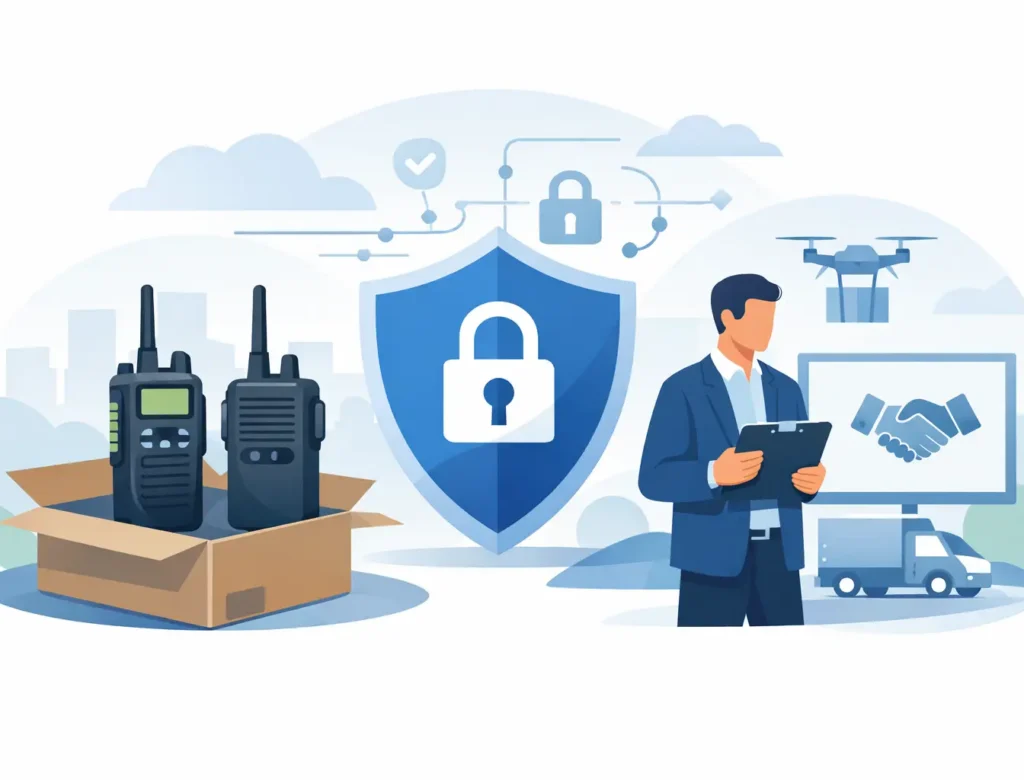
A radio fleet replacement can leave a facilities team with shelves of portable units, vehicle mobiles, chargers, microphones, antennas, and base-station equipment that no longer fit the operating plan. The decision to sell surplus two-way radios should not become an afterthought. Done correctly, it creates budget recovery, reduces storage burdens, protects sensitive information, and keeps retired electronics out of improper disposal streams.
For hospitals, school districts, municipalities, utilities, manufacturers, logistics operations, and public agencies, professional land mobile radio equipment is a business asset until its final disposition. Even equipment that is no longer compatible with a new system may retain resale, trade-in, parts, or recycling value. The key is to work through the process with the same care used to procure and deploy the original fleet.
Why Surplus Radio Disposition Deserves a Plan
Two-way radios are not generic office electronics. Their condition, band, model, accessories, programming, and service history can all affect value. A clean, tested UHF portable with batteries, chargers, and a speaker microphone may be a useful resale asset. A legacy mobile radio with missing accessories may still have value for parts or materials recovery. Even units with no resale market require compliant handling.
The risk side matters just as much. Retired radios can retain talkgroup details, channel plans, unit IDs, contact lists, encryption-related information, Wi-Fi credentials, or operational settings. For a hospital, a public-safety organization, or a utility, those details may reveal more about operations than an unmanaged disposal process should allow.
Storage creates its own cost. Equipment kept in a warehouse, maintenance room, or vehicle bay occupies space, invites loss, and becomes harder to inventory as personnel change. A defined disposition process turns a dormant pile of equipment into a documented business decision.
Start With an Inventory, Not a Guess
You do not need a perfect asset register to request a quote, but better information produces a faster and more accurate valuation. Start by separating equipment into broad categories: portable radios, mobile radios, repeaters, base stations, control stations, dispatch consoles, chargers, batteries, microphones, and antennas.
For each major group, capture the manufacturer, model number, approximate quantity, frequency band, cosmetic condition, and whether accessories are included. Photos of representative equipment, labels, and any staging pallets can help establish a practical starting point. If the fleet is large, a spreadsheet is useful. If it is small, a clear count and a few photos may be enough.
Condition descriptions should be candid. Note cracked housings, damaged displays, missing knobs, depleted batteries, asset tags, engraving, and equipment that will not power on. Buyers who specialize in LMR equipment can often evaluate mixed-condition lots, but hidden issues can delay approval or reduce the final value.
Include the Equipment Around the Radios
Accessories are easy to overlook because they are often stored separately from radios. Yet chargers, batteries, speaker microphones, surveillance kits, vehicle mounts, control heads, and programming-related accessories can affect the value and resale potential of a lot. Keep compatible items together where possible.
Do not assume older equipment has no market because your organization has moved to a newer standard or manufacturer. Demand varies by band, model family, industry use case, and availability of replacement equipment. Low-band, VHF, UHF, and 800 MHz equipment should all be identified rather than discarded as a mixed electronics load.
Protect Data Before Equipment Leaves Your Control
A factory reset is not always sufficient for professional radio equipment. Depending on the model and configuration, critical information may remain in codeplugs, memory locations, removable media, subscriber databases, or other stored settings. Encryption keys and security-sensitive configurations require particular attention.
Before a pickup is scheduled, establish who owns the decision to release the equipment. That may involve communications, IT, security, procurement, legal, and asset-management teams. Confirm whether radios need to be deprogrammed internally, whether encryption material must be zeroized under your organization’s procedures, and what documentation is required for the transfer.
A specialist disposition partner should provide a defined data-handling process, including certified data wiping where applicable. Ask how the provider handles programmed radios, what records are available after processing, and how non-resalable equipment is controlled through recycling. This is not administrative fine print. It is part of protecting your organization after the equipment has left the building.
Understand What Determines Fair-Market Value
The highest offer is not automatically the best offer. A meaningful valuation considers whether the buyer can actually manage pickup, data handling, testing, resale, payment, and recycling without shifting unexpected work or liability back to your organization.
Market value is typically influenced by several factors:
- Model, frequency band, and continued demand in the secondary market
- Quantity and consistency of the equipment lot
- Functional and cosmetic condition
- Included batteries, chargers, microphones, and other accessories
- Programming status, security requirements, and cost to prepare equipment for resale
- Current availability of comparable equipment and replacement parts
A buyer may offer more for a complete, uniform fleet than for the same number of mixed models with missing accessories. Conversely, a mixed lot may still be worthwhile when it is evaluated by a company with the ability to resell usable equipment, harvest parts responsibly, and recycle the balance. The right outcome depends on the equipment, not a one-size-fits-all estimate.
For organizations replacing their radio system, trade-in credit may also deserve consideration. Applying residual value toward new equipment can simplify budgeting and reduce the number of transactions your team must manage.
Choose a Buyer That Can Handle the Entire Job
A general electronics recycler may be appropriate for ordinary office equipment, but LMR assets present different valuation and data-security questions. The best fit is a specialist that understands commercial and public-sector radio fleets, can evaluate equipment across bands and manufacturers, and has a documented process for units that cannot be resold.
Ask direct operational questions. Can the buyer provide a same-day fair-market quote? Is nationwide pickup included? Who supplies packing materials or compensates your organization for packing? How quickly is payment issued after verification? What documentation supports data wiping and compliant recycling? Can the provider accept working, nonworking, and incomplete equipment in the same project?
These questions help separate a serious lifecycle-management partner from a buyer interested only in the easiest equipment. They also give procurement and finance teams the information needed to compare offers based on total value, not just a line-item price.
Radiowell manages this process for organizations retiring professional radio equipment, with fair-market quotations, nationwide pickup, rapid payment, secure data handling, and compliant recycling options for equipment that cannot be reused.
Make Pickup Easy for Your Operations Team
A good pickup plan should reduce disruption, not create a new project for maintenance or IT. Once a sale is approved, designate a staging location that is secure, accessible, and large enough for the expected boxes or pallets. Keep radios and matching accessories together, but do not spend staff time trying to make the shipment look like a retail display.
Remove internal records, paperwork, and unrelated materials from cases or storage cabinets. Retain your own inventory and chain-of-custody records, especially for serialized assets. If equipment has agency tags or property markings, follow internal policy before release.
For larger fleets, schedule around operational demands. A hospital may need to stage equipment without affecting clinical communications. A municipality may need approval from multiple departments. A utility may need to retain backup inventory through storm season. A qualified buyer should accommodate those realities rather than force an impractical pickup timeline.
Keep Compliance and Sustainability Connected
The final destination of retired radios matters. Equipment that can be tested, refurbished, and returned to service extends the useful life of manufactured materials. Equipment that cannot be resold should be processed through compliant e-waste channels rather than sent to a landfill or an unverified downstream vendor.
For asset owners, this is both an environmental and governance issue. Documented recycling supports sustainability reporting and demonstrates responsible handling of electronic assets. Proper processing also helps address obligations associated with EPA, FCC, DOT, and applicable e-waste requirements.
There is a practical balance to maintain. Reuse is valuable when equipment can serve another legitimate operational need. Recycling is necessary when condition, age, damage, or security requirements make reuse inappropriate. A responsible disposition program recognizes both outcomes and documents each one.
Turn Retirement Into a Controlled Asset Recovery Process
The strongest surplus-radio programs do not wait until storage rooms overflow. They establish a repeatable process for inventory, authorization, data protection, valuation, pickup, payment, and final reporting whenever a system is upgraded or a site closes.
That discipline gives operations leaders certainty, finance teams measurable recovery, and compliance teams a defensible record. More importantly, it lets your organization retire communications equipment with the same responsibility that guided its use: protect the people and operations that depended on it, then put every remaining asset to its best possible use.
More News
-
Where to Sell Police Radios for Maximum Value
Where to sell police radios securely: compare buyers, protect programming data, recover fair value, and arrange compliant pickup…
How to Monetize Retired Radios Without Risk
Learn how to monetize retired radios with fair valuation, secure data handling, free pickup, resale options, and compliant…
How Radio Resale Partners Protect Asset Value
Radio resale partners help organizations recover value, protect sensitive radio data, manage pickups, and meet recycling obligations with…

America’s largest buyer of used two-way radio equipment. Maximizing value, compliance, and sustainability for surplus LMR equipment.
Recycle and Partners