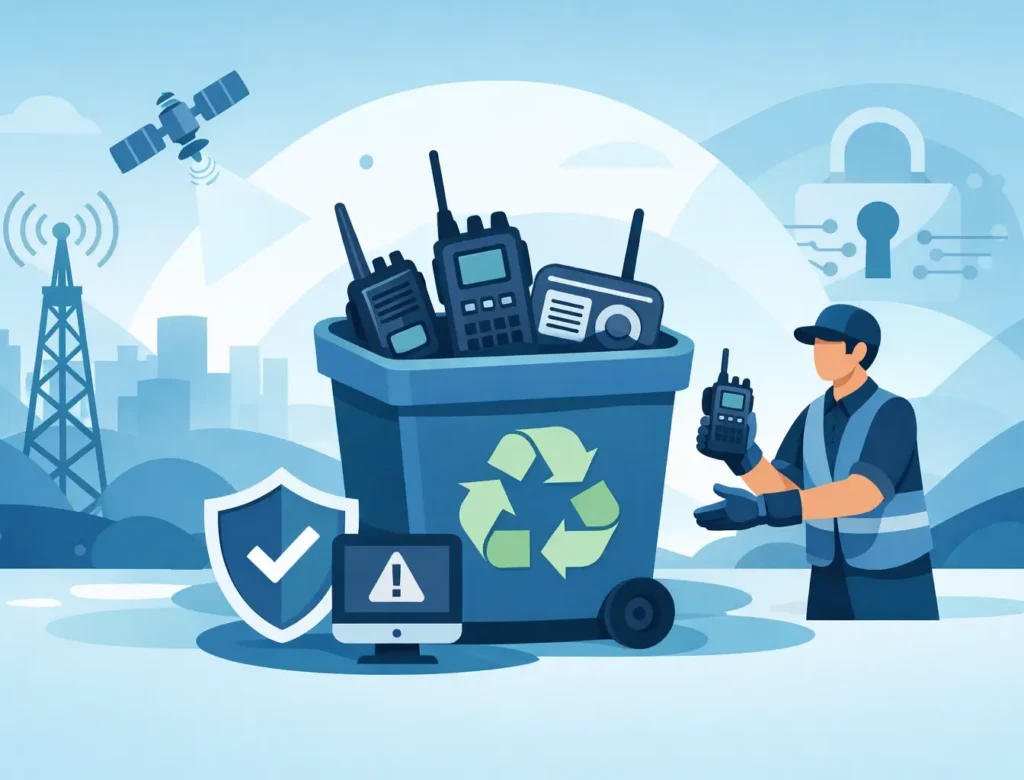
A retired radio fleet can still carry active frequencies, encryption material, operational identifiers, lithium-ion batteries, and meaningful resale value. FCC compliant radio disposal is not a matter of putting old handhelds in an electronics bin. For hospitals, municipalities, utilities, schools, manufacturers, and logistics operators, it is a controlled asset-retirement process that protects communications operations while recovering value from equipment that still has a useful life.
The term is often used as shorthand, but it deserves a precise definition. The FCC does not operate a single radio-disposal program or issue a universal disposal certificate. Instead, responsible disposition requires organizations to address FCC licensing and authorized-use obligations alongside data security, EPA and state e-waste rules, DOT shipping requirements, and battery-handling standards. The right process depends on the equipment, its programming, its condition, and whether it will be resold, traded in, or recycled.
What FCC Compliant Radio Disposal Actually Means
For most professional land mobile radio fleets, FCC compliance begins with preventing equipment from being used improperly after it leaves your control. A radio programmed for your licensed frequencies should not remain in circulation with active channel information, unit IDs, talkgroups, encryption keys, or other operational settings that could enable unauthorized access or transmissions.
Disposal also should not be confused with license administration. Retiring a portable, mobile, base station, or repeater does not automatically cancel or modify an FCC license. If a frequency is no longer needed, or if system details have changed, the licensee must manage that filing separately through the appropriate FCC process. Your communications manager, frequency coordinator, or regulatory adviser can determine whether a modification or cancellation is required.
A compliant disposition plan therefore has two tracks: take the physical equipment out of service securely, and confirm that your licensing records still match your operational reality. This distinction is especially relevant when an organization is migrating from analog to digital, consolidating sites, changing vendors, or moving to a new system architecture.
Begin With an Equipment Inventory
A reliable outcome starts before pickup. Identify the radio make, model, quantity, condition, accessories, and location of each asset. Include portable radios, mobile radios, chargers, microphones, repeaters, base stations, control stations, batteries, antennas, and spare parts. Equipment that appears obsolete may still have resale demand, particularly equipment supporting VHF, UHF, 700/800 MHz, or specialized industrial applications.
The inventory should also distinguish radios that are simply surplus from radios that are damaged, incomplete, locked, or no longer economically repairable. That separation helps determine whether the best route is buyback, trade-in, resale, parts recovery, or recycling. Sending every device directly to recycling can eliminate potential financial recovery and create unnecessary replacement costs.
For larger fleets, collect serial numbers or asset tags where feasible. This improves chain-of-custody records, supports reconciliation with fixed-asset registers, and gives finance and procurement teams a clearer view of recovered value. It also reduces the risk of radios being left in desk drawers, vehicles, maintenance shops, or remote sites after a system refresh.
Remove Radios From Service Before Transfer
A radio that is physically old may still be operationally active. Before transfer, remove it from service according to your internal communications procedures. That may include disabling access in the radio-management platform, removing it from subscriber records, revoking user assignments, and updating maintenance logs.
Programming should receive particular attention. Many professional radios retain channel plans, unit identifiers, emergency settings, network access information, and operational labels. Digital systems may also contain talkgroup assignments, system keys, authentication material, or encryption-related data. The level of sensitivity varies by system, but the assumption should be that a retired radio contains information worth protecting until it has been verified otherwise.
A factory reset alone is not always sufficient. It may not remove every configuration item, and it may not satisfy an organization’s records-retention, security, or public-sector accountability requirements. A qualified disposition partner should use documented data-wiping procedures appropriate to the radio type and provide confirmation that the equipment was processed.
For public safety, healthcare, utilities, and other critical operations, involve the radio-system administrator before assets leave the premises. That extra review can prevent an avoidable issue, such as a backup radio being sold while still associated with an active operational profile.
Handle Batteries and Shipping as Separate Compliance Issues
Battery condition changes the disposal plan. Damaged, swollen, leaking, recalled, or poorly stored batteries require special handling and should not be packed with general electronics without review. Lithium-ion batteries can create fire and transportation risks, while older nickel-cadmium battery packs may require different recycling controls.
DOT requirements may apply when batteries and electronic equipment move through the transportation network. Packaging, labeling, quantity limits, and carrier acceptance rules can vary based on battery chemistry, condition, and shipment configuration. This is one reason free pickup and professional packing matter: the logistics process should be designed around the equipment being moved, not improvised by staff who already have operational responsibilities.
Organizations should avoid accumulating batteries indefinitely in storage rooms or vehicle bays. Long-term storage increases fire risk, makes inventory less accurate, and can reduce the resale value of the radio fleet. A scheduled disposition event is often more efficient than treating each retired device as an exception.
Choose Reuse Before Recycling When It Makes Sense
The most responsible outcome is not always destruction. A functional two-way radio can continue serving another organization, extend the useful life of its components, and generate cash recovery or trade-in credit for the original owner. Reuse supports circular equipment management while reducing the need for newly manufactured replacement equipment.
That does not mean every radio should be resold. A disposition specialist should evaluate demand, age, frequency band, condition, accessories, repairability, firmware status, and whether the model can be legally and practically reused. Equipment with limited resale potential can still be dismantled for usable components or sent through compliant e-waste recycling channels.
The trade-off is straightforward: resale takes evaluation and secure processing, while recycling may be the correct path for nonfunctional or unsupported assets. A specialized buyer can make that distinction without forcing your team to manage listings, shipping, buyer screening, data removal, or downstream recycling decisions one unit at a time.
Document the Chain of Custody
A strong disposal program produces records, not assumptions. Your organization should be able to show what equipment was transferred, when it was collected, how sensitive programming was handled, what value was recovered, and how non-resalable assets were recycled.
The documentation needed will depend on your organization. A school district may need clean asset records and budget recovery. A hospital may prioritize security and vendor controls. A municipality or government agency may need detailed audit support. A national enterprise may need location-level reconciliation across dozens of sites. The process should be scaled to that requirement rather than treated as a simple surplus sale.
Ask the disposition provider how it handles four practical areas: serialized inventory reporting, documented data wiping, battery and hazardous-material routing, and final recycling records. Also clarify who is responsible for packing, pickup, freight coordination, and payment. Hidden logistics costs and unclear handoffs can erase much of the value a buyback program is supposed to deliver.
Avoid the Common Shortcuts
The most costly disposal mistakes usually begin as attempts to save time. Storing radios indefinitely ties up space and leaves sensitive equipment unaccounted for. Selling devices locally without clearing programming creates security and authorized-use concerns. Mixing damaged batteries into ordinary shipments can introduce transportation risk. Sending usable equipment directly to scrap can leave significant value on the table.
A better approach is to establish a repeatable retirement workflow whenever radios are replaced, consolidated, or declared surplus. Assign internal ownership, collect inventory information early, remove devices from active service, and work with a specialist that can coordinate pickup, valuation, secure processing, resale, and recycling. For organizations with recurring radio refresh cycles, this turns disposition from a last-minute cleanup task into a predictable part of lifecycle management.
Radiowell helps organizations convert surplus LMR equipment into payment or trade-in value while providing nationwide pickup, documented data wiping, and compliant recycling for equipment that cannot be resold. The result is less administrative burden for your team and more certainty about where retired radios go next.
The best time to plan radio disposition is when replacement equipment is being budgeted, not after retired units have filled a storage closet. Treat each radio as both a controlled communications asset and a potential source of recovery, and the final step of your upgrade can protect your organization as effectively as the first.
More News
-
How a School Radio Donation Program Works
Plan a school radio donation program that protects data, meets FCC and e-waste obligations, and puts usable two-way…
Municipal Radio Asset Disposition Done Right
Municipal radio asset disposition can recover budget, protect radio data, and ensure compliant recycling when communication fleets are…
Hospital Radio Fleet Replacement Without Waste
Plan a hospital radio fleet replacement with secure data handling, asset recovery, free pickup, and compliant recycling for…

America’s largest buyer of used two-way radio equipment. Maximizing value, compliance, and sustainability for surplus LMR equipment.
Recycle and Partners