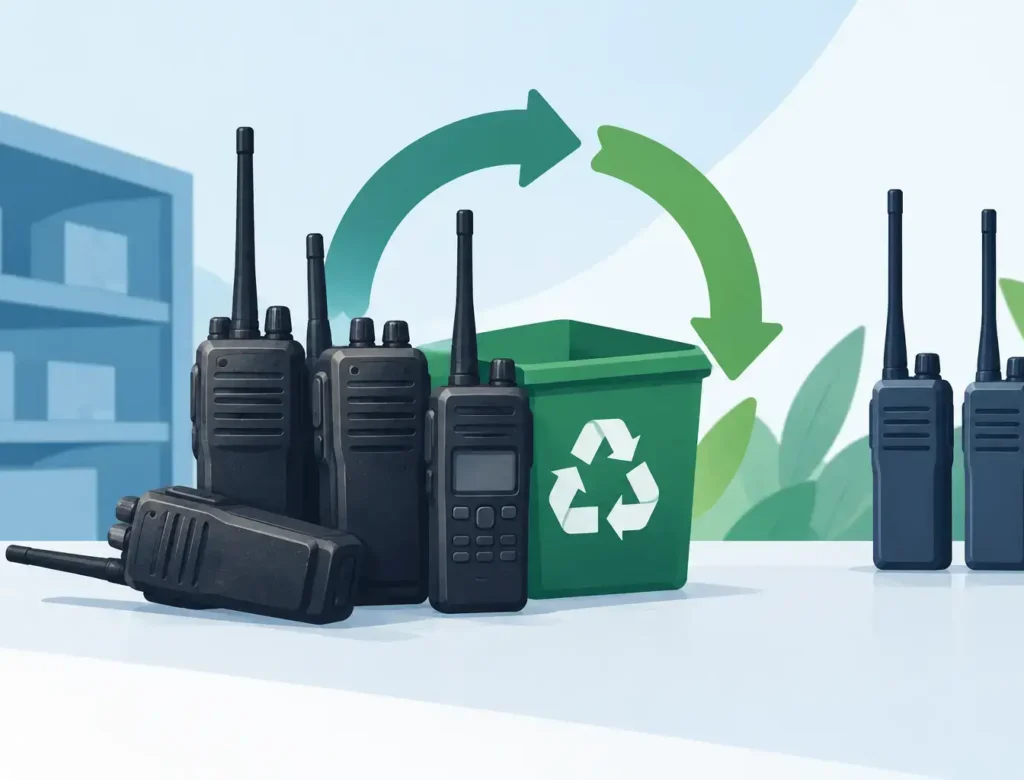
A radio replacement project can leave an organization with hundreds of portable radios, mobile units, chargers, batteries, microphones, and base-station components sitting in a storage room. Those assets still carry financial value, operational data, and environmental responsibility. Effective asset recovery turns that backlog into a controlled business process: identify the equipment, establish its value, secure sensitive information, arrange pickup, and document final disposition.
For hospitals, municipalities, utilities, manufacturers, school districts, and logistics operations, this is not simply a question of clearing space. Retired land mobile radio equipment can contain programming configurations, unit identifiers, talkgroup information, encryption-related data, and other details that should not be passed to an unknown buyer or discarded without controls. A disciplined recovery process protects the organization while returning value from equipment that is no longer needed.
Why Asset Recovery Is Different From Liquidation
General liquidation treats surplus equipment as inventory to move quickly. Asset recovery takes a broader view. It accounts for market value, chain of custody, data security, transportation, reuse potential, and compliant recycling for equipment that cannot be resold.
That distinction matters with professional two-way radios. A radio fleet may include a mix of current models, discontinued units, damaged equipment, accessories, vehicle-mounted radios, repeaters, and infrastructure components. Some items can be resold and may support a meaningful cash payment or trade-in credit. Others may have limited resale value but still require responsible processing because of batteries, circuit boards, or regulated electronic components.
The right outcome is rarely to treat every item the same way. A recovery partner should evaluate the complete lot, not only select the most valuable radios and leave the rest behind. This reduces administrative work and gives the organization one accountable process for its surplus communications assets.
What Creates Value in Used Radio Equipment
The value of retired LMR equipment depends on more than its original purchase price. Demand for a model, frequency band, condition, age, accessories, quantities, and the availability of replacement parts all influence fair-market value. Portable and mobile radios across low-band, VHF, UHF, and 800 MHz systems may retain value, particularly when they are clean, functional, and accompanied by batteries, antennas, chargers, speaker microphones, or mounting hardware.
Large, consistent lots can also improve recovery results. A fleet of similarly configured radios is easier to test, grade, remarket, and place with a secondary user than a collection of unrelated devices. That does not mean mixed or older inventories have no value. It means the buyer must have the scale and technical knowledge to assess the full range of equipment accurately.
Condition should be described honestly, but organizations should not assume that cosmetic wear eliminates value. Radios with worn housings, missing accessories, or untested status may still have marketable parts or recycling value. The most useful quote process asks for model numbers, quantities, photos when available, and a general description of condition. It should provide a clear valuation quickly rather than forcing staff to perform a time-consuming inventory audit before they can get started.
Secure Data Handling Must Be Part of the Process
Retired radios are often overlooked in data-security plans because they are not computers or smartphones. Yet many professional radios are programmed with operational information. Depending on the system, that may include channel plans, unit IDs, network settings, contact lists, fleet maps, dispatch configurations, or encryption keys.
A responsible asset recovery process starts with custody controls. Equipment should be collected by a known party, tracked from pickup through processing, and handled according to an established data-wiping procedure. The organization should receive documentation confirming that eligible devices were wiped or otherwise processed according to the agreed requirements.
Not every radio stores the same type or level of data, and not every organization has identical security obligations. A school district retiring conventional portable radios may have different concerns from a utility with radios used in critical infrastructure operations. The principle is the same: assess the data risk before equipment changes hands, and choose a specialist that can address it directly.
For equipment with sensitive encryption or configuration information, internal communications and security teams should be involved early. They can identify devices requiring special handling and confirm whether data must be removed before pickup, at a secure processing facility, or through a documented combination of both.
A Practical Asset Recovery Process
The best recovery programs remove work from the organization rather than creating another project for facilities, procurement, or IT teams. A straightforward process usually follows four stages.
1. Identify the surplus
Start with the equipment being retired, replaced, or pulled from storage. Include portable radios, mobile radios, base stations, repeaters, chargers, batteries, microphones, antennas, and related accessories. Basic model numbers and quantities are often enough to begin a valuation. If inventory records are incomplete, photos of labels and group shots of the equipment can help establish the scope.
2. Receive a fair-market quote
A qualified buyer evaluates the lot based on current secondary-market demand and expected processing requirements. The quote should distinguish between equipment with resale value and material that requires compliant recycling. Fast quotes help organizations make disposition decisions before storage, deinstallation, or replacement schedules create unnecessary delays.
3. Arrange secure pickup and packing
Logistics are where many surplus projects stall. Staff may not have approved shipping materials, time to pack hundreds of radios, or a practical way to move heavy mobile-radio and infrastructure equipment. Free nationwide pickup and packing compensation can eliminate those barriers. The organization should know who is collecting the equipment, when it will leave the site, and how custody is documented.
4. Confirm payment, wiping, and final disposition
Once equipment is received and processed, the recovery partner should provide the agreed payment or trade-in credit, along with applicable documentation for data wiping and recycling. This gives finance, sustainability, procurement, and compliance teams a record they can retain for internal reporting and audits.
Reuse First, Recycle Responsibly
The strongest environmental outcome for usable radio equipment is usually reuse. Extending the working life of a professional radio avoids the resource demands of manufacturing a replacement device and supports organizations that need dependable communications equipment at a lower cost.
Reuse is not appropriate for every asset. Equipment that is obsolete, severely damaged, unsafe, or not viable for resale should enter a compliant recycling stream. That process should account for electronic components, batteries, and transportation requirements under applicable EPA, FCC, DOT, and e-waste standards.
Organizations should be cautious of buyers that focus only on the most valuable units. If the provider will not take damaged radios, depleted batteries, outdated chargers, or lower-demand models, the burden of disposal often returns to the organization. A complete program combines resale, trade-in, parts recovery, and no-cost recycling as needed.
When Trade-In Credit Makes More Sense Than Cash
Cash recovery is often the right choice when an organization has completed a migration or has no immediate equipment purchase planned. Trade-in credit can be more useful when replacement radios, accessories, or communications infrastructure are being acquired at the same time.
The decision depends on procurement rules, budget timing, and the condition of the retiring fleet. A trade-in can reduce the net cost of a new purchase and simplify approvals. Cash payment may offer greater flexibility for organizations whose replacement project is already funded. In either case, the value should be transparent and based on the actual equipment being transferred.
Questions to Ask Before Selecting a Recovery Partner
Before releasing retired radios, confirm that the provider can manage the entire disposition cycle. Ask how it determines value, whether pickup is included, how it handles sensitive radio data, what documentation it provides, and what happens to equipment that cannot be resold.
Experience with LMR equipment is especially important. A general electronics recycler may be able to process devices as scrap, but may not recognize the secondary-market value of specific radio models, accessories, frequency bands, or system components. A specialist can make a better distinction between material that should be remarketed and material that should be recycled.
Radiowell’s process is built around that distinction: evaluating surplus communications equipment for maximum recovery value while providing nationwide pickup, documented data handling, payment or trade-in options, and compliant recycling for the remainder.
Retired radios should not become an unmanaged storage problem or a compliance risk waiting for attention. With a clear asset recovery plan, surplus equipment can move out of service quickly, sensitive information can stay protected, and the value remaining in a communications fleet can be put back to work.
More News
-
How Reverse Logistics Firms Recover Radio Value
Reverse logistics firms help organizations recover value from retired two-way radios while protecting data, meeting regulations, and reducing…
Which Radios Need Data Wiping Before Disposal?
Learn which radios need data wiping before resale, trade-in, or recycling, and how to protect keys, contacts, network…
How to Retire Radio Fleets Without Losing Value
Learn how to retire radio fleets with secure data handling, free pickup, fair-market recovery, and compliant recycling nationwide…

America’s largest buyer of used two-way radio equipment. Maximizing value, compliance, and sustainability for surplus LMR equipment.
Recycle and Partners